
Vanilla Pudding Cake
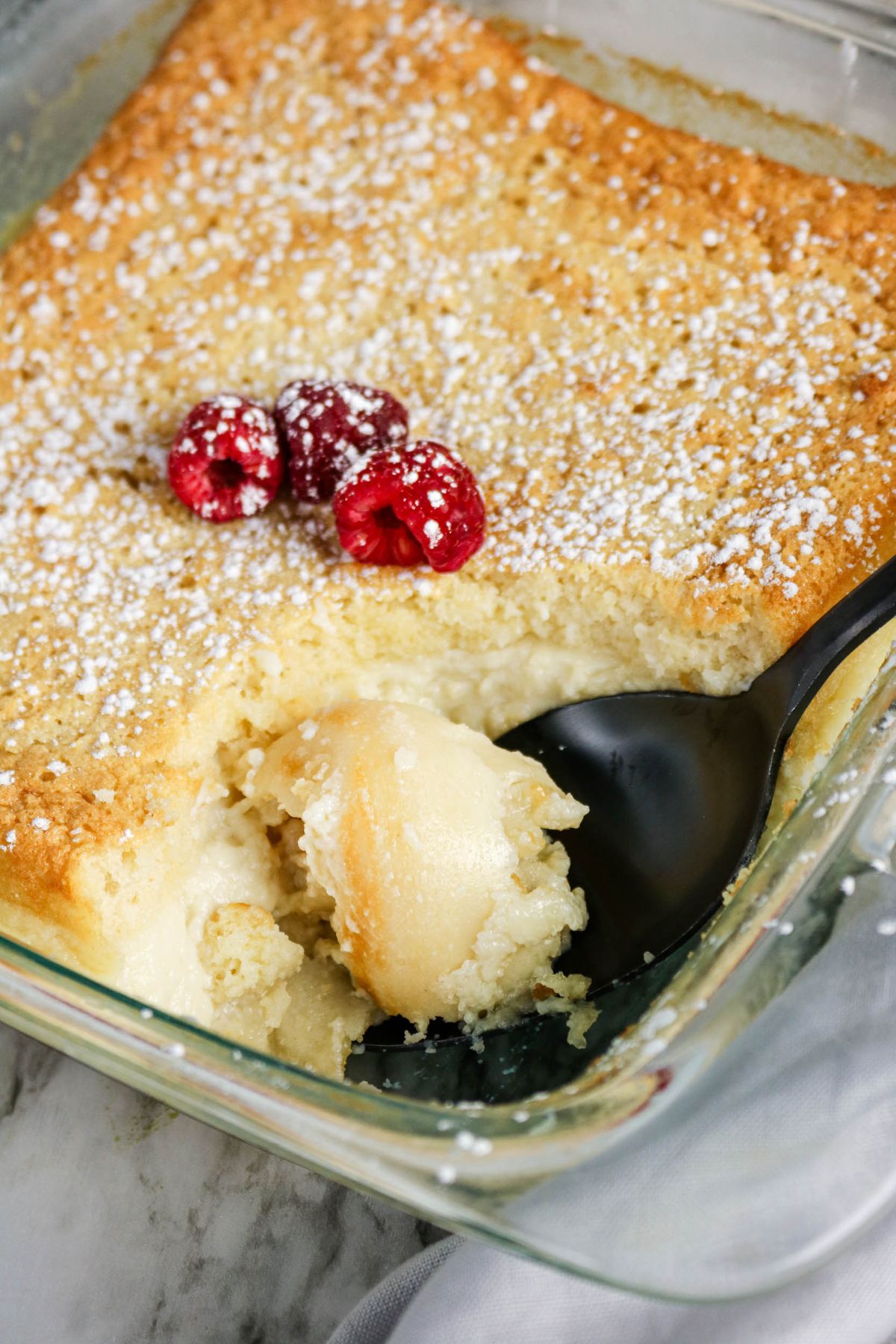
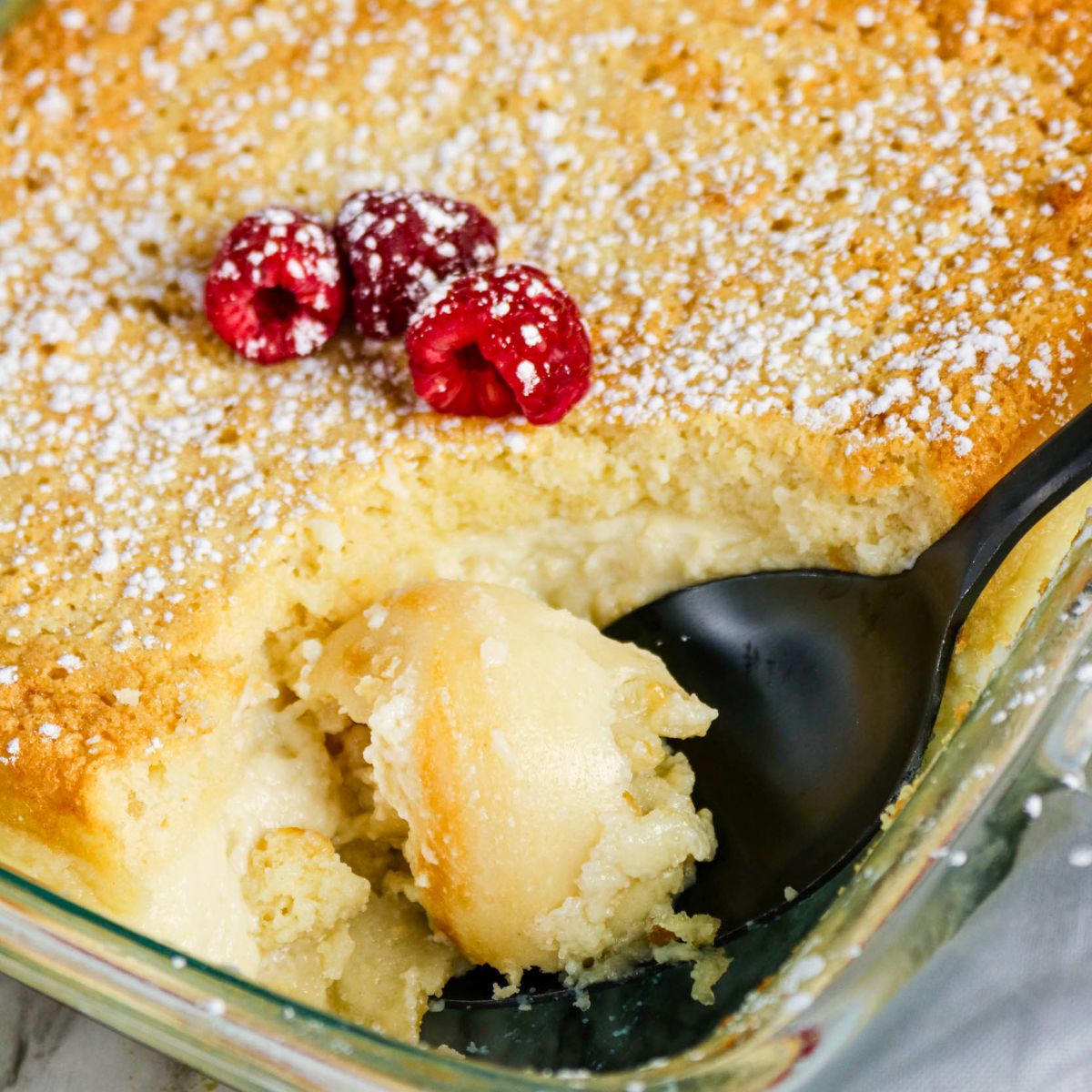
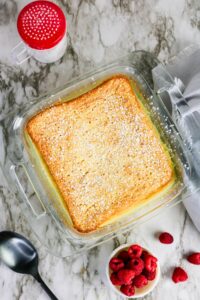
Vanilla Pudding Cake is the kind of old-fashioned dessert that never goes out of style. It’s magic in a baking dish, y’all. You pour in a thin batter, slide it into the oven, and something incredible happens. A fluffy cake rises to the top while a creamy vanilla custard forms underneath.
Would you like to save this?
This pudding cake recipe uses simple pantry staples you probably already have. No boxed mixes, no fancy techniques, no stress. It’s the perfect dessert when you need something sweet without a lot of fuss. Trust me, once you try it, you’ll be making it on repeat.
If you love easy Southern-style desserts, I’ve got plenty more for you to try! Check out my Vanilla Crazy Cake, my rich and tender Vintage Buttermilk Cake, and this showstopper Cannoli Layered Cake.
Best Vanilla Pudding Cake Recipe
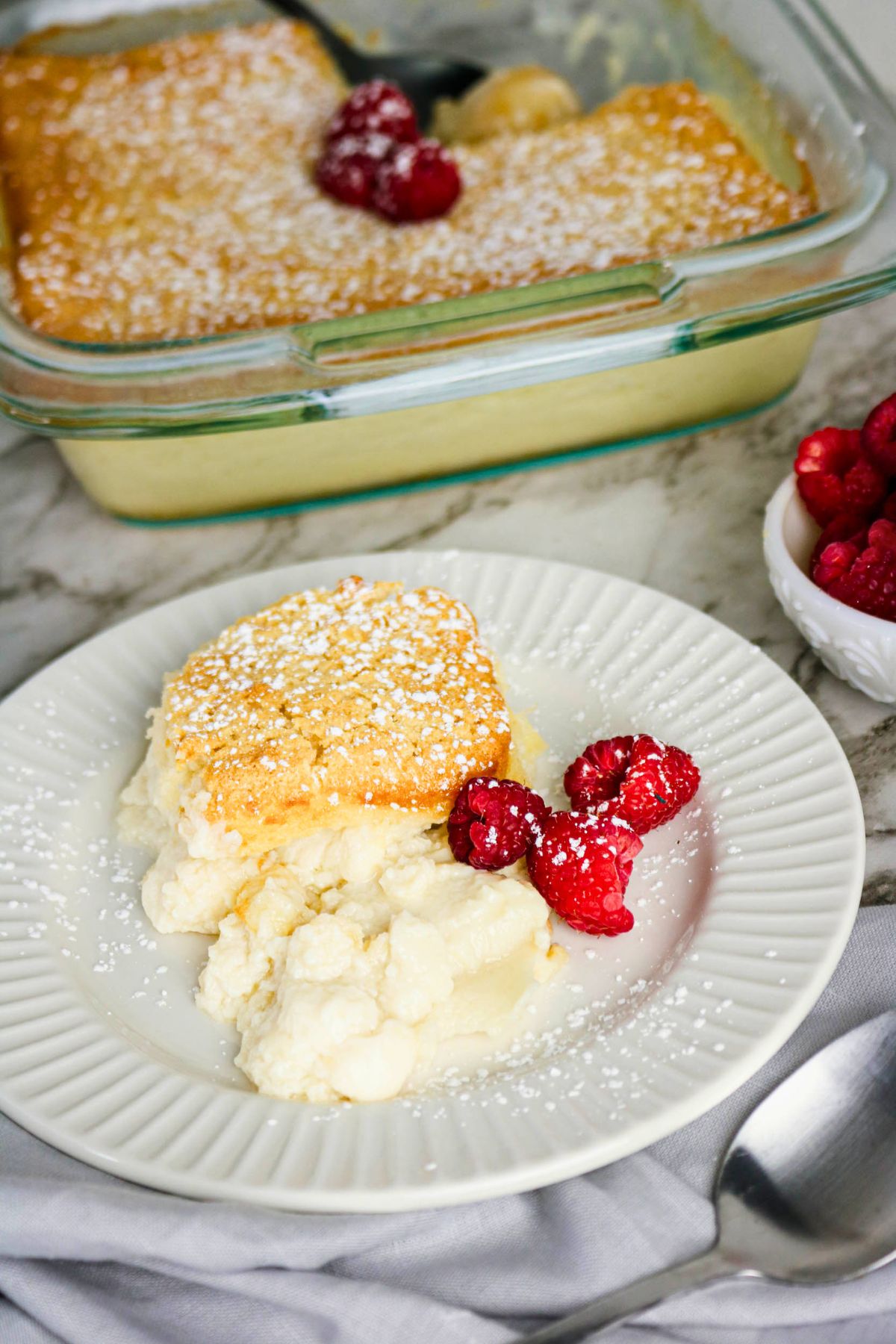
Most vanilla pudding cake recipes call it magic and leave it at that, but there is actually a real reason it works. The beaten egg whites make the batter light enough to rise to the top, while the milk-heavy custard base stays dense and sinks to the bottom. The oven does the separating for you, no stirring or layering required.
I always let this cake rest for at least 15 minutes before serving, and that step matters more than it sounds. Because the custard layer needs that time to set up enough to hold its shape when you spoon it.
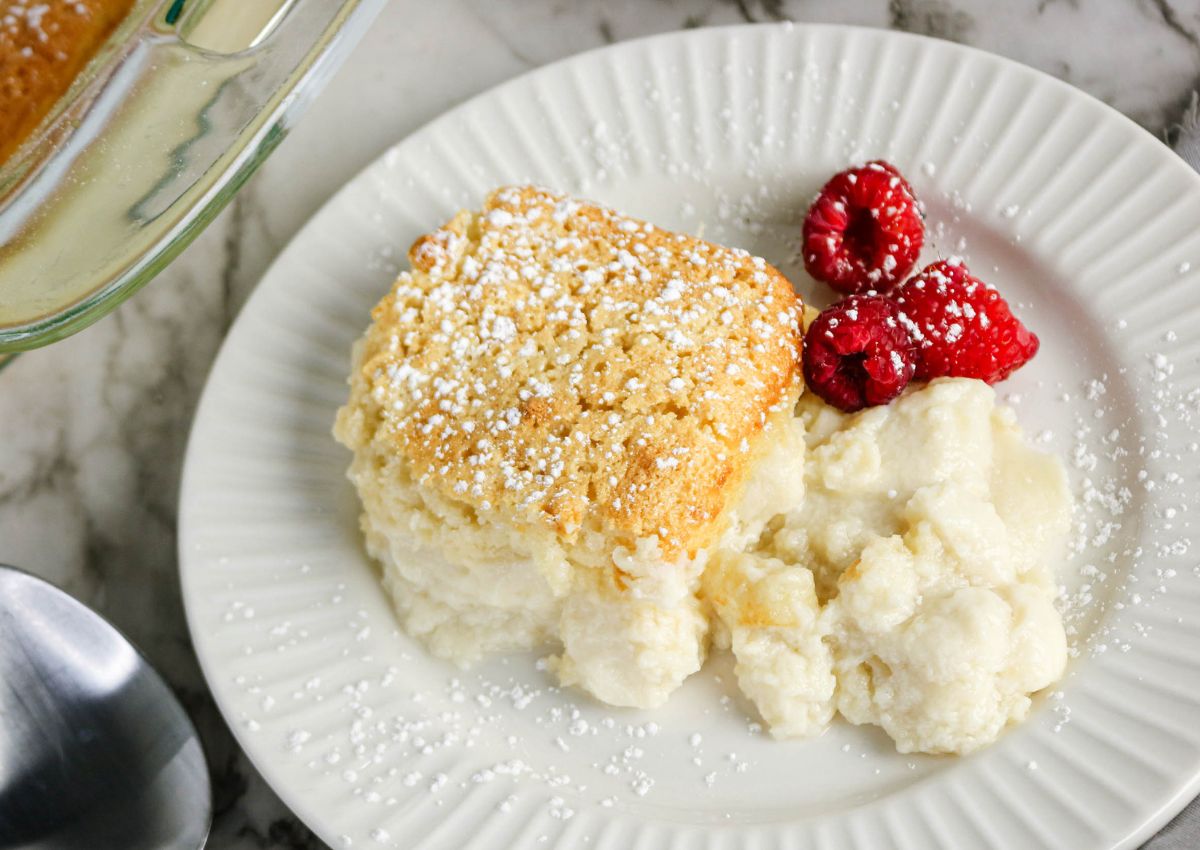
Served warm, the bottom stays soft and loose like a pourable custard; served cold, the cornstarch and eggs have fully set, and the texture firms up into something much closer to a chilled pudding. Both are worth making, and honestly, I have a hard time picking a favorite.
Why You’ll Love This Recipe
- Two desserts in one: You get a fluffy cake on top and a creamy vanilla custard on the bottom, all from one batter.
- Simple pantry ingredients: Butter, eggs, milk, flour, and vanilla are all you need to make this from scratch.
- Easy to make: The prep takes just 20 minutes and the oven does all the heavy lifting for you.
Vanilla Pudding Cake
Equipment
- 8×8-inch baking dish or 1½-quart casserole dish
- mixing bowls
- Electric mixer or hand mixer
- measuring cups and spoons
- Rubber Spatula
- whisk
Ingredients
- ½ cup unsalted butter softened
- ¾ cup granulated sugar
- 3 large eggs separated
- 1 tablespoon vanilla extract
- 1 cup whole milk warmed slightly
- ¾ cup all-purpose flour
- ¼ teaspoon salt
- 1 tablespoon cornstarch
- 1 ½ cups whole milk hot but not boiling
- Optional: powdered sugar whipped cream, or fresh berries for serving
Instructions
- Preheat the oven to 325°F. Lightly grease an 8×8-inch baking dish or a 1 1/2-quart casserole dish.
- In a mixing bowl, beat the butter and sugar until light and fluffy. Add the egg yolks and vanilla extract and mix until smooth.
- Stir in the 1 cup warm milk. Add the flour, salt, and cornstarch and mix until fully combined. The batter will look thin.
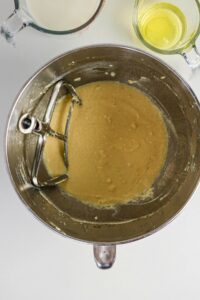
- In a separate bowl, beat the egg whites until soft peaks form. Gently fold the egg whites into the batter until mostly combined. A few streaks are fine.
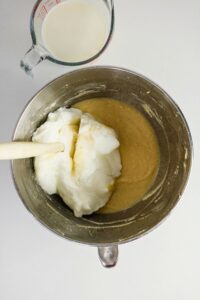
- Pour the batter into the prepared dish. Slowly pour the hot milk over the top. Do not stir.
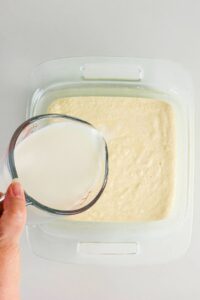
- Bake for 45–50 minutes, until the top is lightly golden and the center still has a slight jiggle underneath. The cake layer will rise to the top while a thick vanilla custard forms below.
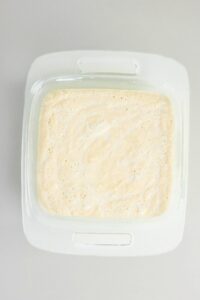
- Let the cake rest for 15–20 minutes before serving warm, or chill for an even thicker pudding texture. Dust with powdered sugar or top with whipped cream and berries if desired.
Notes
- Allow the dessert to rest before serving so the custard can finish setting.
- Fold the egg whites gently to maintain a light texture.
- Pour the hot milk carefully over the batter for the best layer separation.
- Serve with whipped cream or berries for an extra-special finish.
- Refrigerate leftovers for a thicker custard consistency.
Disclaimer:
Any nutritional data I provide is an approximation and actual dietary information can vary based on ingredients and proportion sizes.
Nutrition
Ingredients For Pudding Cake
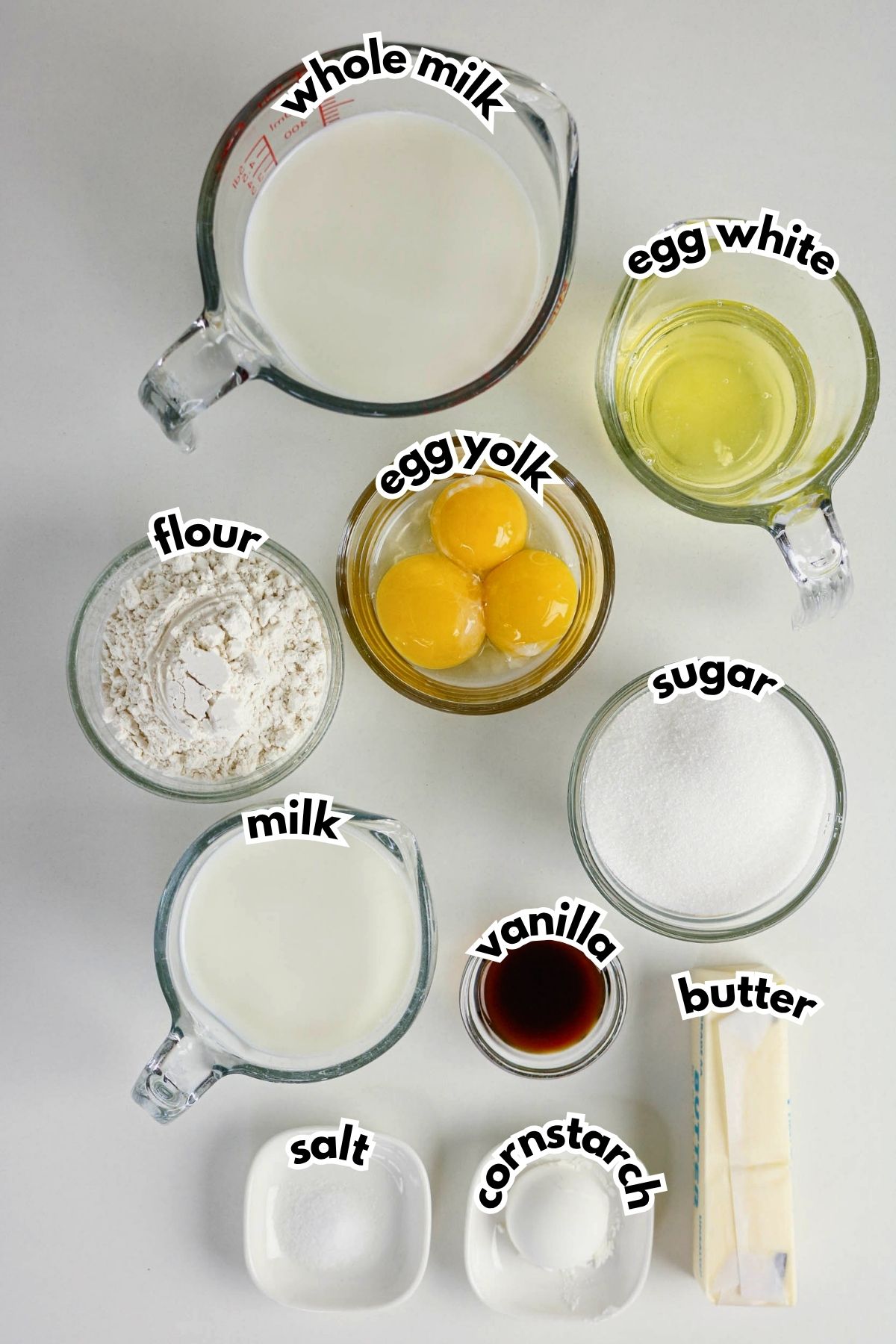
- Unsalted butter (1/2 cup, softened): Butter adds richness and gives the cake a tender crumb. Make sure it’s softened, not melted.
- Granulated sugar (3/4 cup): Sugar sweetens the batter and helps create that beautiful golden top.
- Eggs, separated (3 large): The yolks add richness to the batter. The beaten whites make the cake layer light and airy.
- Vanilla extract (1 tablespoon): This is a vanilla cake, so do not skimp here. Use pure vanilla for the best flavor.
- Whole milk (1 cup warm + 1 1/2 cups hot): Whole milk gives the richest custard. The warm milk goes into the batter, the hot milk gets poured over the top.
- All-purpose flour (3/4 cup): Flour gives the cake structure. The batter will look thin, and that is totally fine.
- Cornstarch (1 tablespoon): Cornstarch helps thicken the custard layer as it bakes.
- Salt (1/4 teaspoon): A pinch of salt balances out the sweetness and enhances all the flavors.
Best Pudding Cake Recipe Tips
- Do not skip separating the eggs. Beating the whites to soft peaks is what creates that fluffy cake layer on top.
- Watch for the jiggle. The center should have a slight jiggle when done. That is your custard layer, not underbaked cake.
Common Mistakes To Avoid
- Using skim or low-fat milk. Whole milk has the fat content the custard layer needs to set up properly. Skim milk produces a thin, watery custard that never quite comes together.
- Stirring after adding the hot milk. This is the one step you absolutely cannot skip — or rather, must skip. Stirring disrupts the density separation that creates the two layers, and you will end up with a blended, soggy mess instead of a cake.
- Using melted butter instead of softened. Melted butter changes the texture of the batter and prevents it from creaming properly with the sugar. Softened butter traps air during mixing, and that air is part of what helps the cake layer rise.
- Overbaking until there is no jiggle. A fully set center means the custard layer has dried out. Pull the cake when the edges are set and the center has a slight wobble — it will firm up as it cools.
- Using a pan that is too large. A bigger pan spreads the batter too thin, and the layers do not have enough depth to separate properly. Stick to an 8×8-inch baking dish or a 1 1/2-quart casserole dish for the best results.
Vanilla Pudding Cake FAQs
Why does my vanilla pudding cake look jiggly in the center?
That jiggle is totally normal! It means the custard layer formed underneath the cake. It will set up more as it cools, so let it rest for 15 to 20 minutes before serving.
Can I make this pudding cake ahead of time?
Yes! You can bake it ahead and store it in the fridge. The custard layer actually gets thicker and even creamier when chilled overnight.
Why is my batter so thin?
A thin batter is exactly what you want here. That thin consistency is what allows the custard layer to form on the bottom while the cake rises to the top.
Can I use a different size pan?
An 8×8-inch baking dish or a 1 1/2-quart casserole dish works best. A larger pan may cause the layers to be too thin and could change the bake time.
How To Store Leftovers
Storage: Cover the baking dish tightly with plastic wrap or a lid. Store leftovers in the refrigerator for up to 4 days. The custard layer will thicken as it chills.
Freezing: This cake can be frozen! Let it cool completely first. Wrap individual portions in plastic wrap and store in a freezer-safe container for up to 2 months.
Reheating: Reheat individual servings in the microwave for 20 to 30 seconds. You can also enjoy it cold straight from the fridge. Both ways are delicious!