
Sourdough Dutch Oven Bread (Budget-Friendly Artisan Loaf)
Sourdough dutch oven bread gives you a bakery-quality crust and chewy crumb at home, using nothing but flour, water, salt, and starter. The Dutch oven creates the steam burst that lifts your loaf and cracks the crust — you don’t need a specialty bread oven to get those results. I use all-purpose flour instead of bread flour, which keeps this under $2 a loaf and still delivers a gorgeous rise.

Would you like to save this?
Why This Sourdough Dutch Oven Bread Recipe Works
Most sourdough dutch oven recipes call for bread flour, which costs twice as much as all-purpose and isn’t always easy to find. This recipe uses all-purpose flour and still achieves a full open crumb and crackly crust — I’ve baked this loaf dozens of times and the results hold up every single time.
The stretch-and-fold method during bulk fermentation builds gluten without any kneading, which means less effort and a better texture. I do three rounds of folds spaced 30 minutes apart — each round strengthens the dough and helps it trap gas for that airy interior. Baking in a preheated Dutch oven creates the steam burst in the first 25 minutes that gives the crust its signature crackle.
If you love baking with sourdough starter, try my Sourdough Sandwich Bread for an everyday slicing loaf, or use up extra starter in my Sourdough Discard Chocolate Chip Muffins. For soups and stews to serve alongside this bread, my Creamy Taco Soup and Beer Braised Short Ribs are both great pairings.
Ingredients
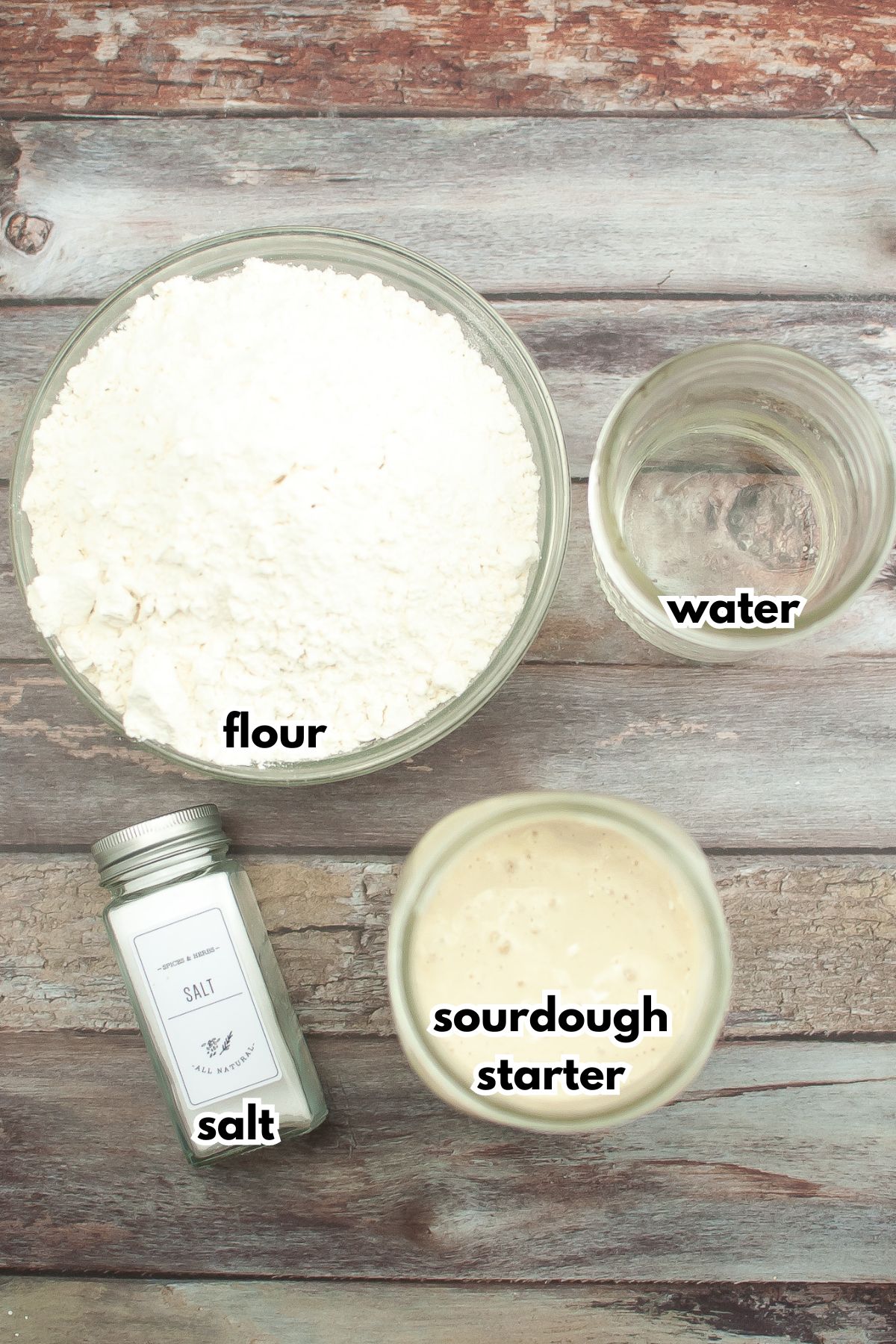
Active sourdough starter — the leavening agent that gives sourdough its rise and signature tang; it must be fed and bubbly before you use it.
All-purpose flour — the base of the dough; all-purpose works great here and keeps the cost down compared to bread flour.
Water — hydrates the flour and starter to form the dough; room temperature or slightly warm (around 75°F) works best.
Salt — controls fermentation speed and adds essential flavor; add it after the starter and water are mixed so it doesn’t inhibit the starter.
How To Make Sourdough Dutch Oven Bread

Add your active, fed starter to the warm water and stir until fully dissolved. This is the base of your dough — everything else builds on this step.

Add the flour and salt to the starter-water mixture and mix until a rough, shaggy dough forms with no dry patches. Cover with a kitchen towel and let it rest for 1 hour.
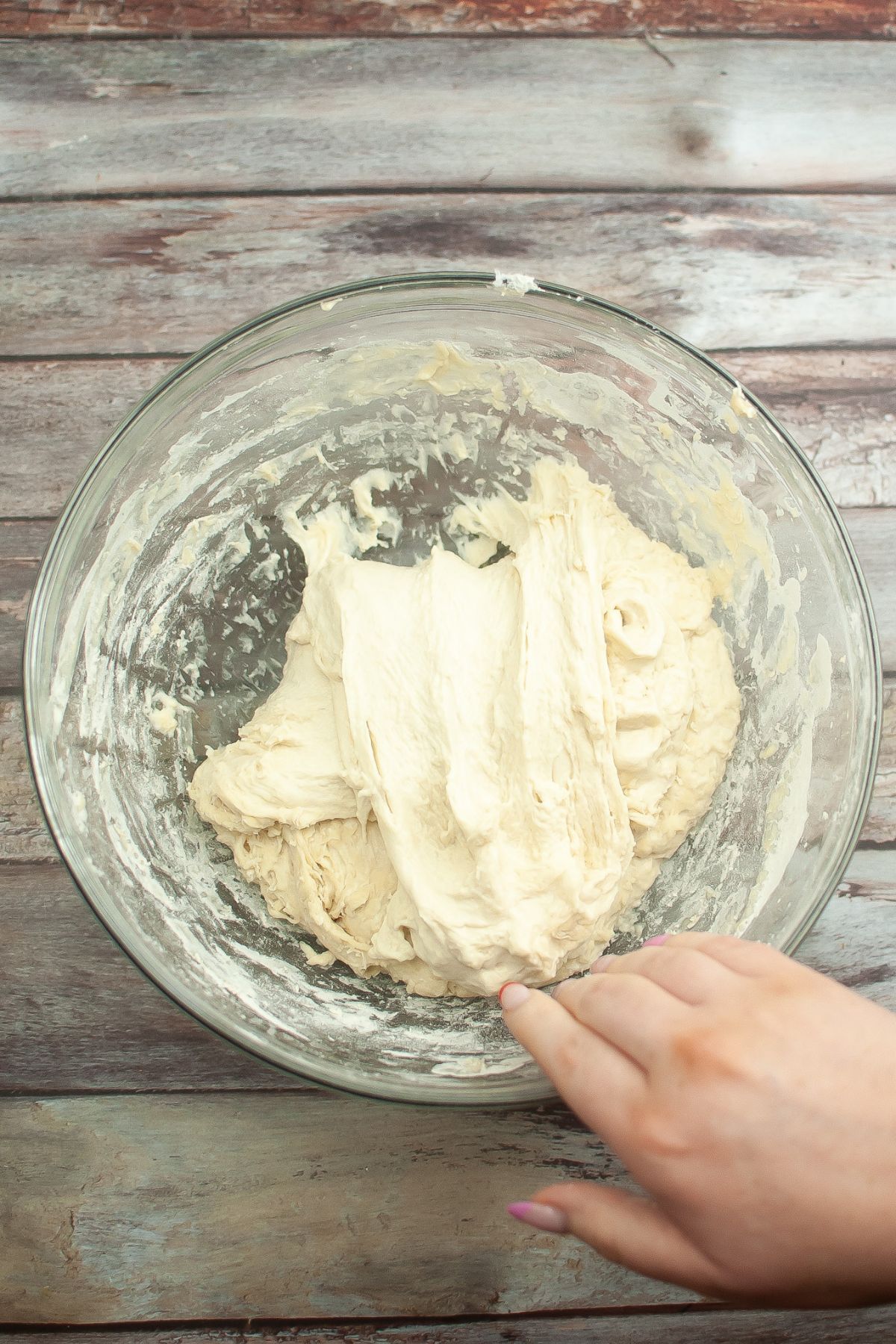
Perform the first stretch and fold. Wet your hand, grab one side of the dough, and stretch it up as high as it will go without tearing. Fold it over to the center, rotate the bowl a quarter turn, and repeat all the way around. Cover and rest 30 minutes.
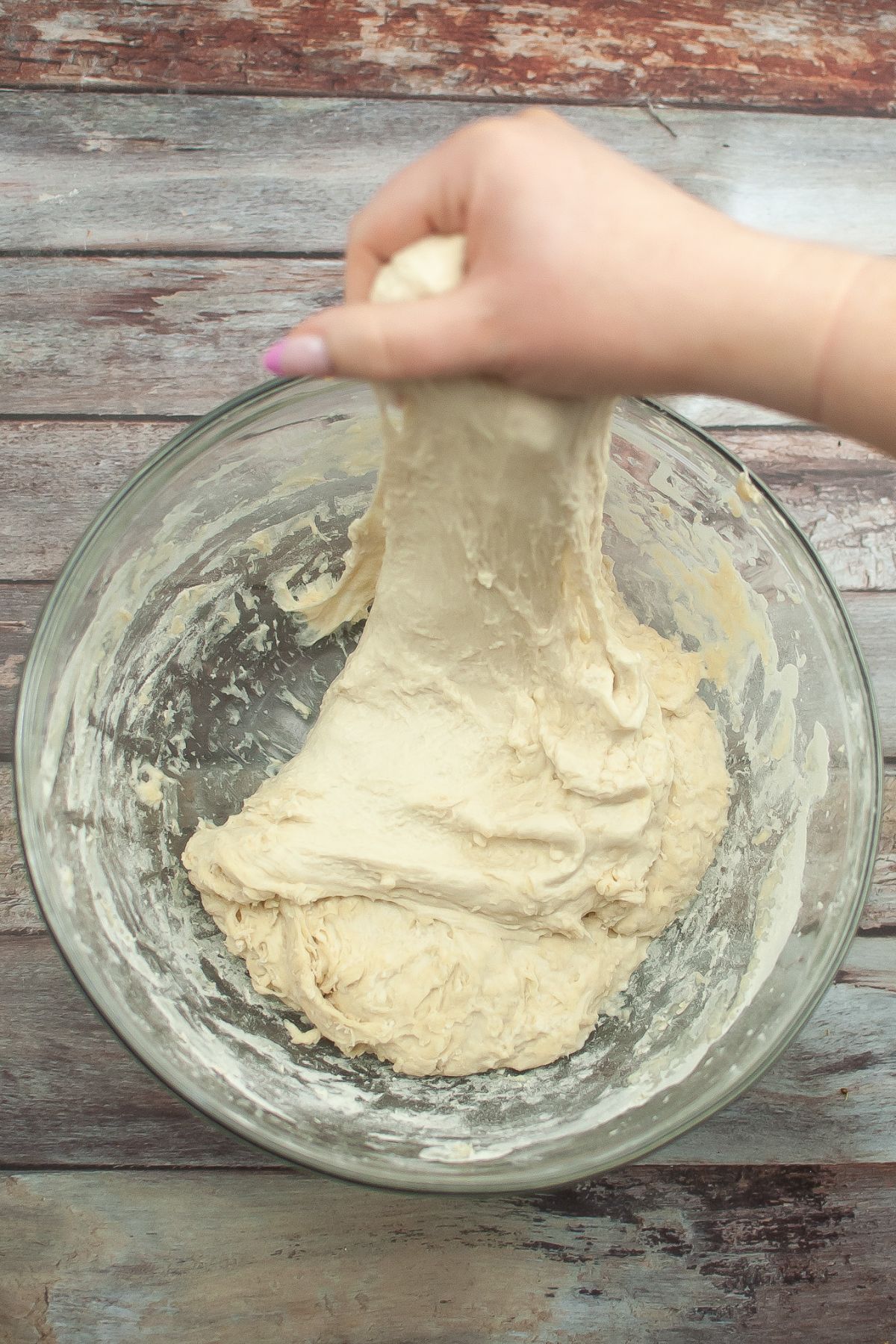
Repeat the stretch and fold a second time. Cover and rest 30 minutes, then do a third and final round of stretch and fold. The dough will feel noticeably smoother and more elastic with each round.

Cover loosely and let bulk ferment in a warm spot for 3.5–7 hours until the dough doubles in size and looks airy. Shape it into a tight ball, place seam-side up in a floured bowl, cover with plastic wrap, and refrigerate overnight (8–12 hours).

The next day, preheat your oven with the Dutch oven inside at 450°F for 1 hour. Turn the cold dough onto parchment, score the top with a sharp knife or bread lame, then lower it into the hot pot. Bake covered for 50 minutes, uncover, and reduce heat to 410°F for 10–15 minutes until deep golden brown. The internal temp should reach 210°F.
Tips for Baking Sourdough Bread
- Use your starter when it’s at peak activity — doubled in size, bubbly, and passing the float test.
- Weigh your ingredients instead of measuring by volume for consistent results every time.
- Keep the dough warm (70–75°F) during bulk fermentation; a cold kitchen will slow things down significantly.
- Preheat your Dutch oven for at least 45 minutes before baking — it needs to be very hot when the dough goes in.
- Score the top of the loaf just before it goes in the oven; this controls where the crust opens up.
- Let the baked loaf rest for at least one hour before cutting — slicing too early lets steam escape and makes the crumb gummy.
Common Mistakes to Avoid When Making Sourdough Dutch Oven Bread
- Using starter that isn’t active enough — if it didn’t double and doesn’t smell yeasty-tangy, feed it again before baking.
- Rushing the bulk fermentation — the dough should increase by 50–75% and feel airy, not just hit a fixed number of hours.
- Over-proofing the dough — if the surface looks soupy or collapses when touched, it’s gone too far.
- Skipping surface tension during shaping — a loose, slack ball won’t hold its structure in the oven.
- Opening the lid too early — keep it on for the full first 25 minutes so the loaf gets maximum steam before the crust sets.
FAQs
Dense sourdough usually means the starter wasn’t active enough, bulk fermentation was too short, or the dough over-proofed and lost structure. Check your starter’s activity level before every bake.
How to Store and Reheat
- Storage: Keep your sourdough at room temperature, cut-side down on a cutting board or wrapped loosely in a kitchen towel, for up to 3 days. Avoid plastic bags — they trap moisture and soften the crust.
- Freezing: Slice the loaf before freezing so you can pull out individual pieces as needed. Wrap slices in plastic wrap and store in a zip-top freezer bag for up to 2 months.
- Reheating: Toast slices directly from frozen in a toaster or toaster oven. For a whole frozen loaf, thaw at room temperature and warm in a 350°F oven for 10–12 minutes to revive the crust.

Sourdough Dutch Oven Bread
Equipment
- Large Mixing Bowl
- kitchen scale
- dutch oven
- Parchment Paper
- tea towel or plastic wrap
Ingredients
- 50 grams starter active and fed – see step 1
- 350 grams warm water
- 500 grams flour
- 9 grams salt
Instructions
- Discard by half. Feed. Let sit for 4-6 hours. In 4-6 will be at its peak rise because it’s at its most active.
- Mix the starter and water. Once mixed, add the flour and salt. Make it shaggy.
- Cover with a flour sack cloth for 1 hour in a warm place.
- Stretch and fold by pulling on a side of the dough in the bowl. Stretch as far as you can without ripping your dough. Then fold over the dough. Continue in a circle until every circle of your dough has been stretched and pulled.
- Then cover for 30 minutes.
- Stretch and fold again.
- Cover for 30 minutes.
- Stretch and fold last time.
- Cover for 3.5 – 7 hours in a warm place to allow your bread to bulk ferment. It needs to double in size.
- Shape and put into bowl. Cover with cling wrap (to prevent air drying out your dough) and proof on the counter for another hour in a warm place.
- Cover with cling wrap. Put in fridge overnight (pull out between 8-12 hours).
Next day:
- Preheat the Dutch oven to 450 degrees for an hour.
- Bake for 50 minutes with the Dutch oven top on, then 410 degrees for 10-15 minutes off.
- The internal temperature should be 220 degrees.
Notes
Disclaimer:
Any nutritional data I provide is an approximation and actual dietary information can vary based on ingredients and proportion sizes.